
The Most Beautiful Space Phenomena: A Cosmic Gallery
A Journey Through the Universe’s Most Dazzling Natural Wonders and the Science Behind Their Beauty

The universe is under no obligation to make sense to you.” — Neil deGrasse Tyson
The universe serves as nature's greatest artist, creating spectacular displays of light, color, and cosmic drama that captivate both scientists and the general public. From glowing nebulae to colliding galaxies, space offers an endless gallery of phenomena that are both scientifically fascinating and visually breathtaking.
Esahubble: All the fascinating pics here.
Nebulae: Stellar Nurseries and Cosmic Graveyards
Planetary Nebulae: The Art of Stellar Death
Despite their misleading name, planetary nebulae represent some of the most stunning objects in the night sky. These gossamer shells of gas are created when dying stars between 1-8 solar masses shed their outer atmospheres, which are then illuminated by the remaining central star's ultraviolet radiation.
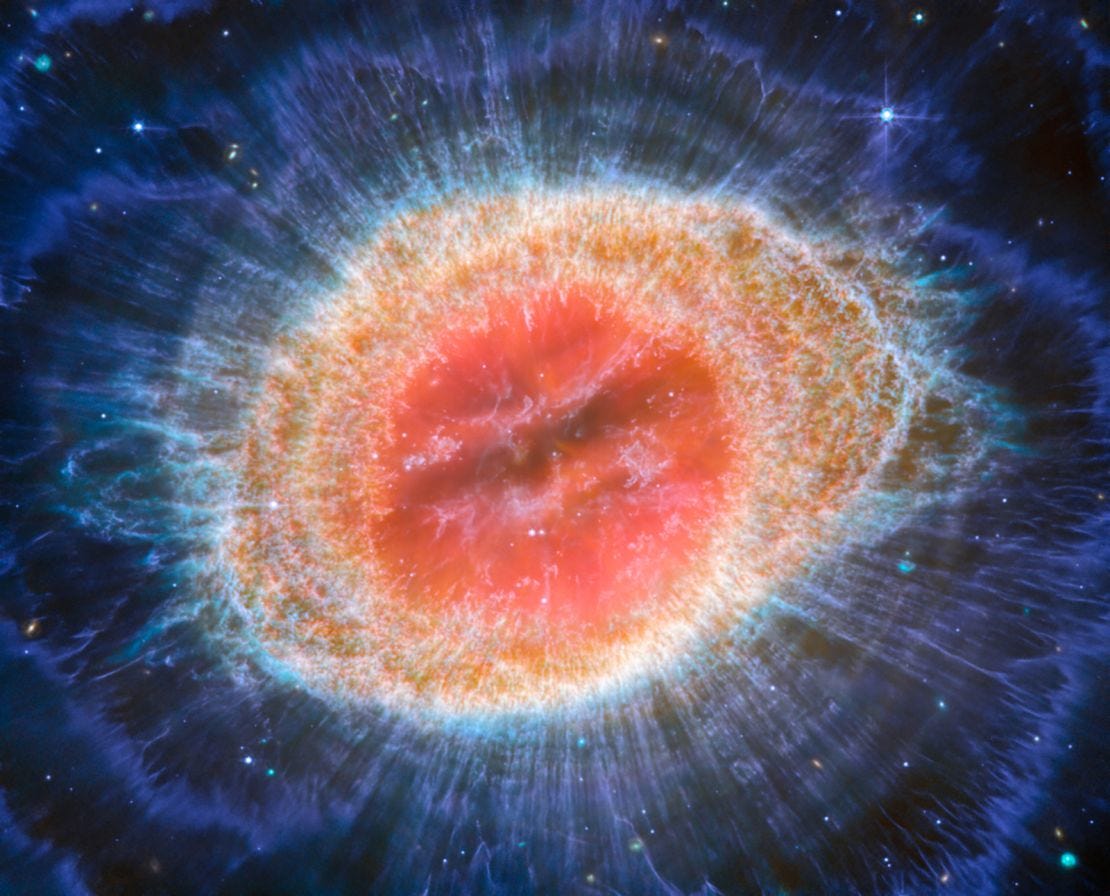
The Ring Nebula, a colorful planetary nebula showcasing the dying stages of a star, captured in stunning detail by space telescopes.
The Ring Nebula (Messier 57) exemplifies this cosmic artistry. James Webb Space Telescope observations reveal intricate layers of expelled gas glowing in vivid blues, greens, and reds.
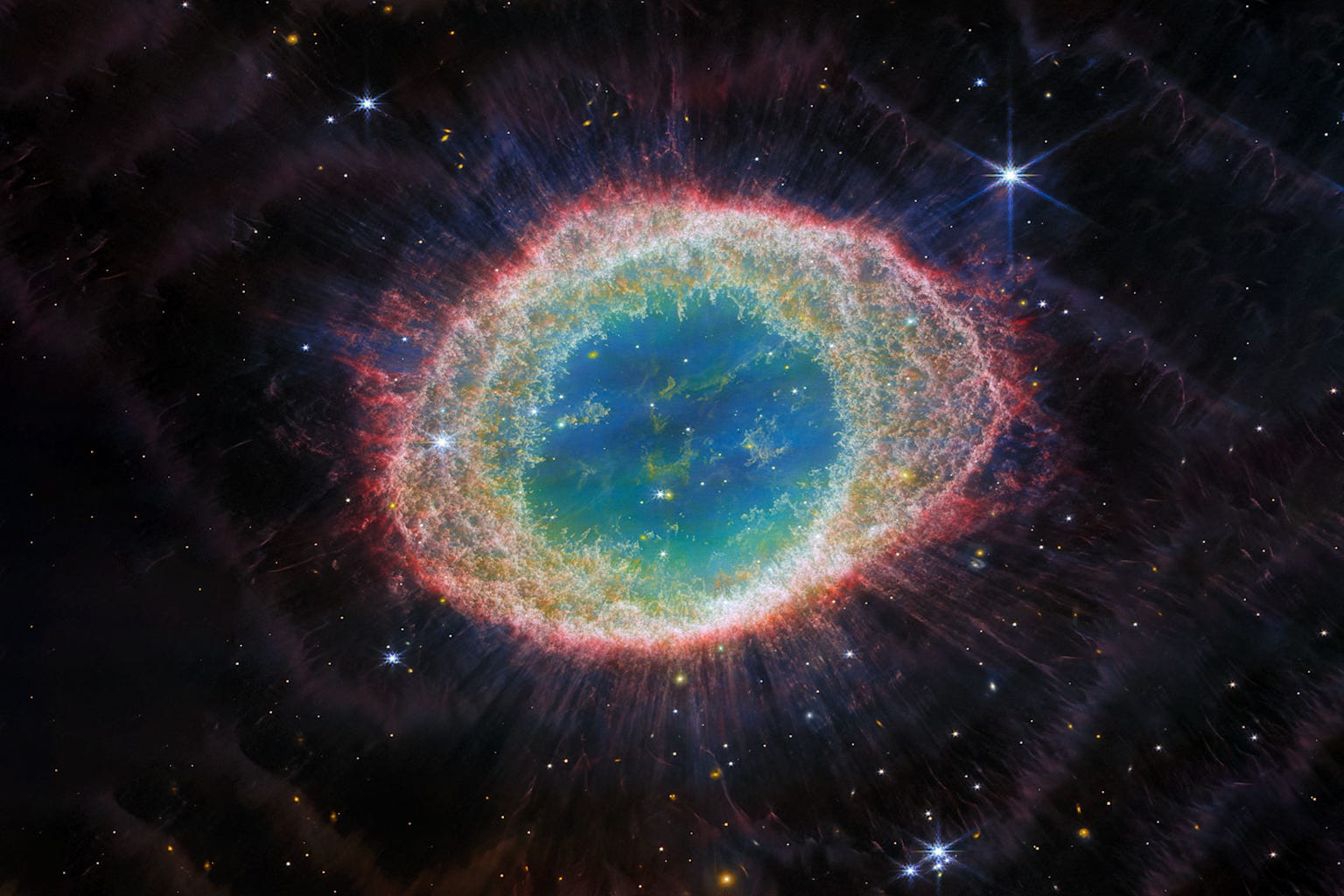
The Ring Nebula shown in vibrant colors captured by the James Webb Space Telescope, illustrating the outer layers of a dying star
The colors aren't merely beautiful—they serve as diagnostic tools revealing the nebula's composition. Oxygen produces green emissions, hydrogen glows red, and helium creates blue hues.
Star-Forming Regions: Cosmic Construction Sites
The Carina Nebula and the iconic Pillars of Creation showcase active stellar nurseries where new stars are born.
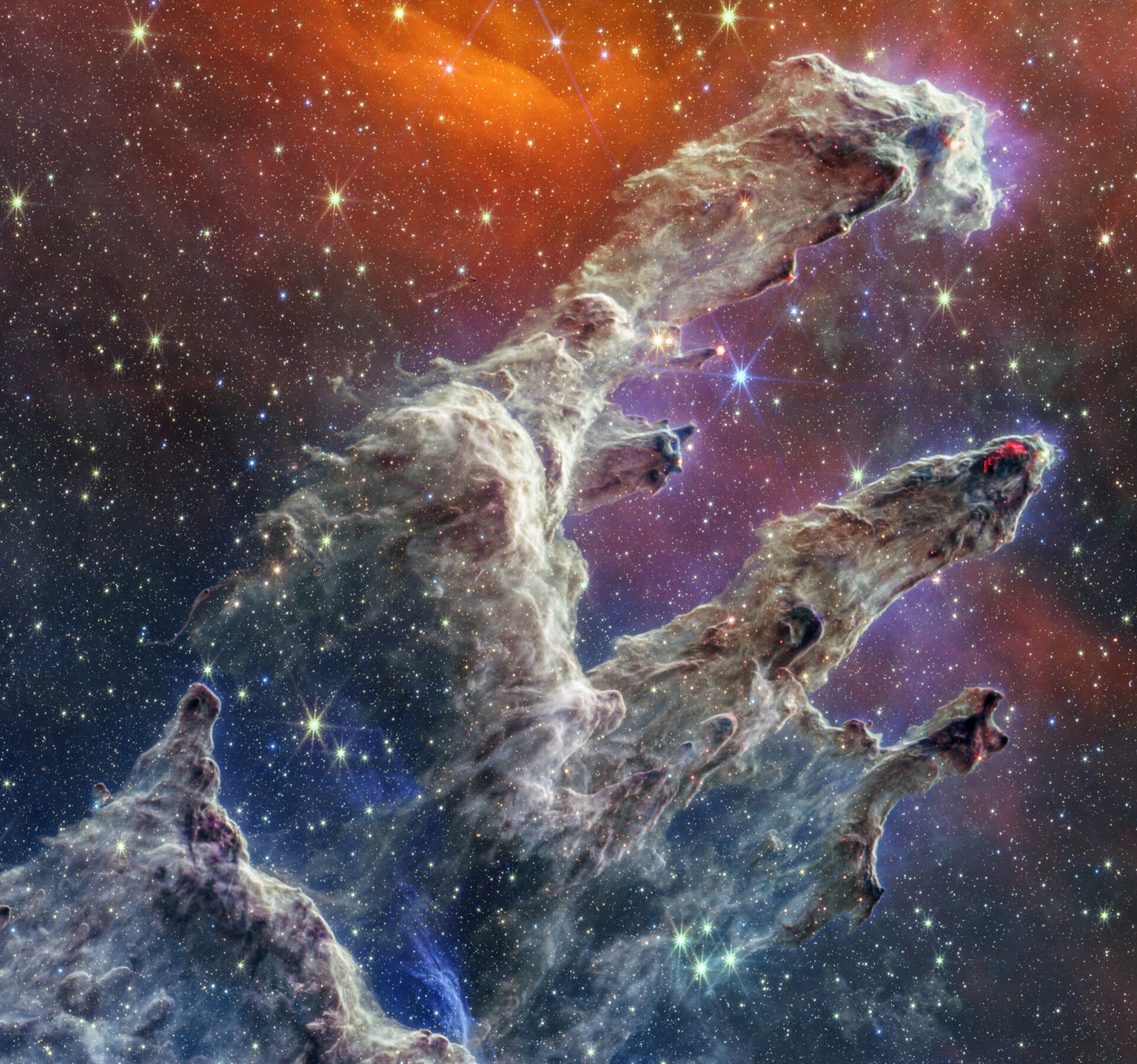
The Pillars of Creation in the Carina Nebula captured in vivid infrared light by the James Webb Space Telescope, revealing intricate star-forming columns of gas and dust digitaltrends
These towering structures, some stretching five light-years tall, are sculpted by intense stellar winds from nearby massive stars, creating dramatic formations of gas and dust.livescience
Webb's infrared capabilities penetrate these dust clouds, revealing hidden newborn stars and their dramatic outflows. The Flame Nebula contains numerous brown dwarfs—"failed stars" that straddle the boundary between large planets and small stars.
The Science of Nebular Colors:
Red hues: Hydrogen atoms recombining after ionization.
Green emissions: Doubly-ionized oxygen atoms.
Blue colors: Hot star reflection or ionized oxygen.
Orange/yellow: Warm dust heated by starlight.
Aurora: Earth's Magnetic Light Show
Auroras are Earth’s reminder that even magnetic fields can dance.
Earth's aurora represents one of the most accessible beautiful space phenomena, occurring when charged particles from solar wind interact with our planet's magnetosphere. These "northern lights" (aurora borealis) and "southern lights" (aurora australis) create dynamic curtains of light dancing across polar skies.
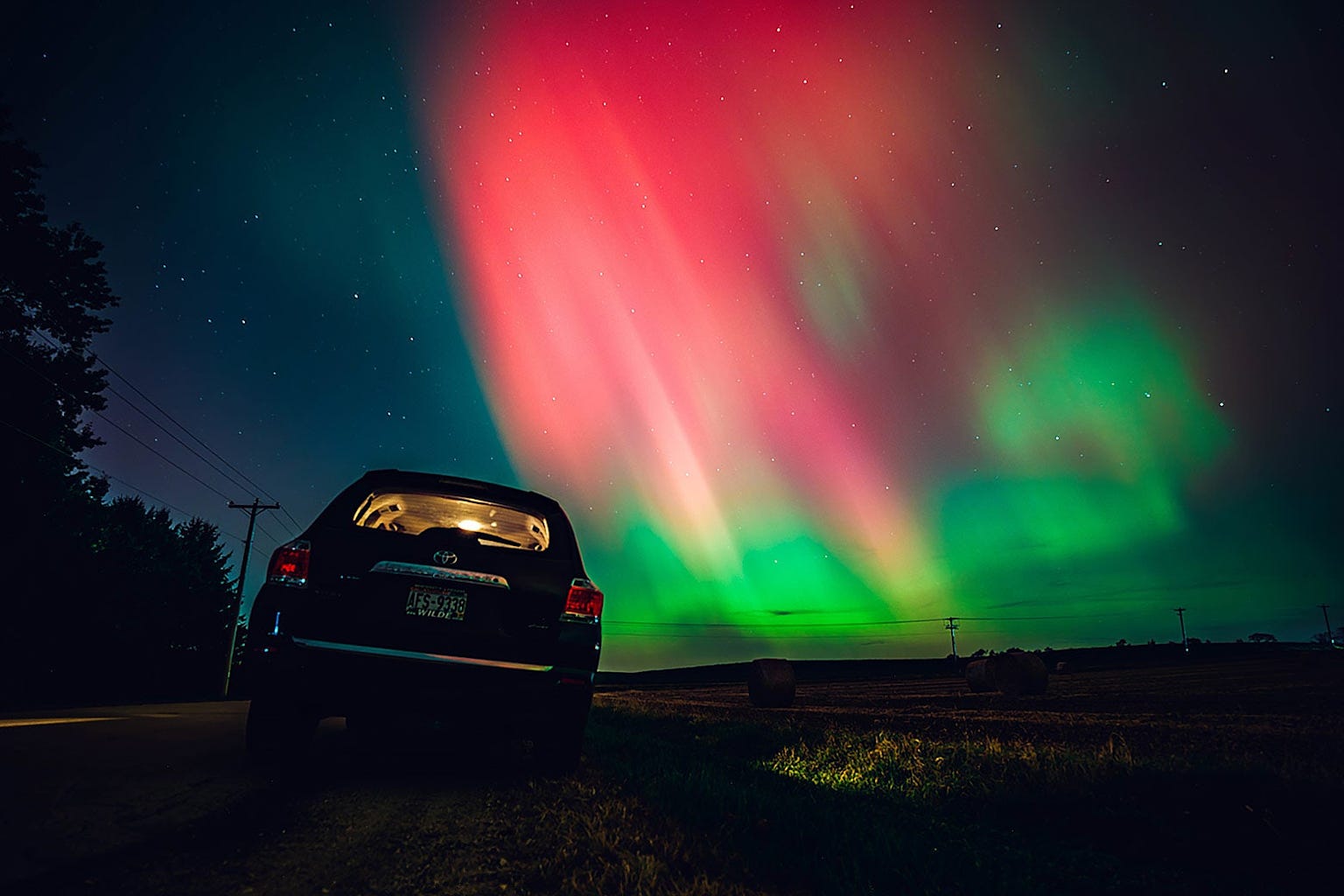
Aurora borealis glowing in vibrant green and pink hues over a rural landscape at night slate
The process begins with solar flares and coronal mass ejections launching charged particles toward Earth. Our magnetic field channels these particles toward the poles, where they collide with atmospheric gases at altitudes of 80 miles to several thousand miles above Earth's surface. Oxygen produces characteristic green colors at lower altitudes and rare red emissions higher up, while nitrogen creates blue and purple hues.
Jupiter's Magnificent Auroras
Jupiter's aurora proves even more spectacular, powered not only by solar wind but also by particles from its volcanic moon Io, creating permanent aurora displays visible in ultraviolet.
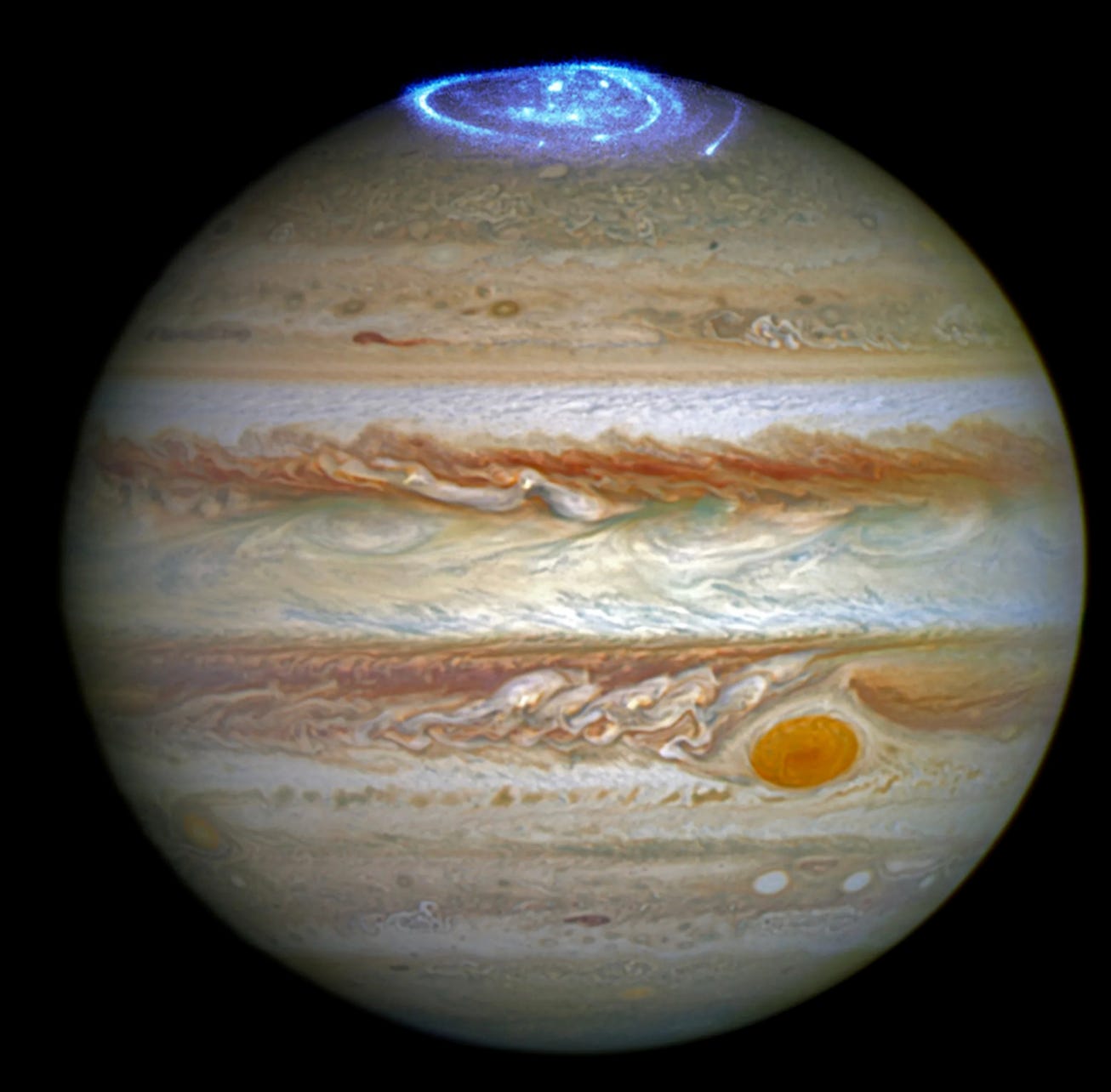
These auroras are created when high-energy particles enter Jupiter's atmosphere near its magnetic poles and collide with atoms, producing brilliant blue and white glowing patterns.
Galaxy Collisions
When galaxies collide, they choreograph the grandest ballet of light.
Cosmic Encounters
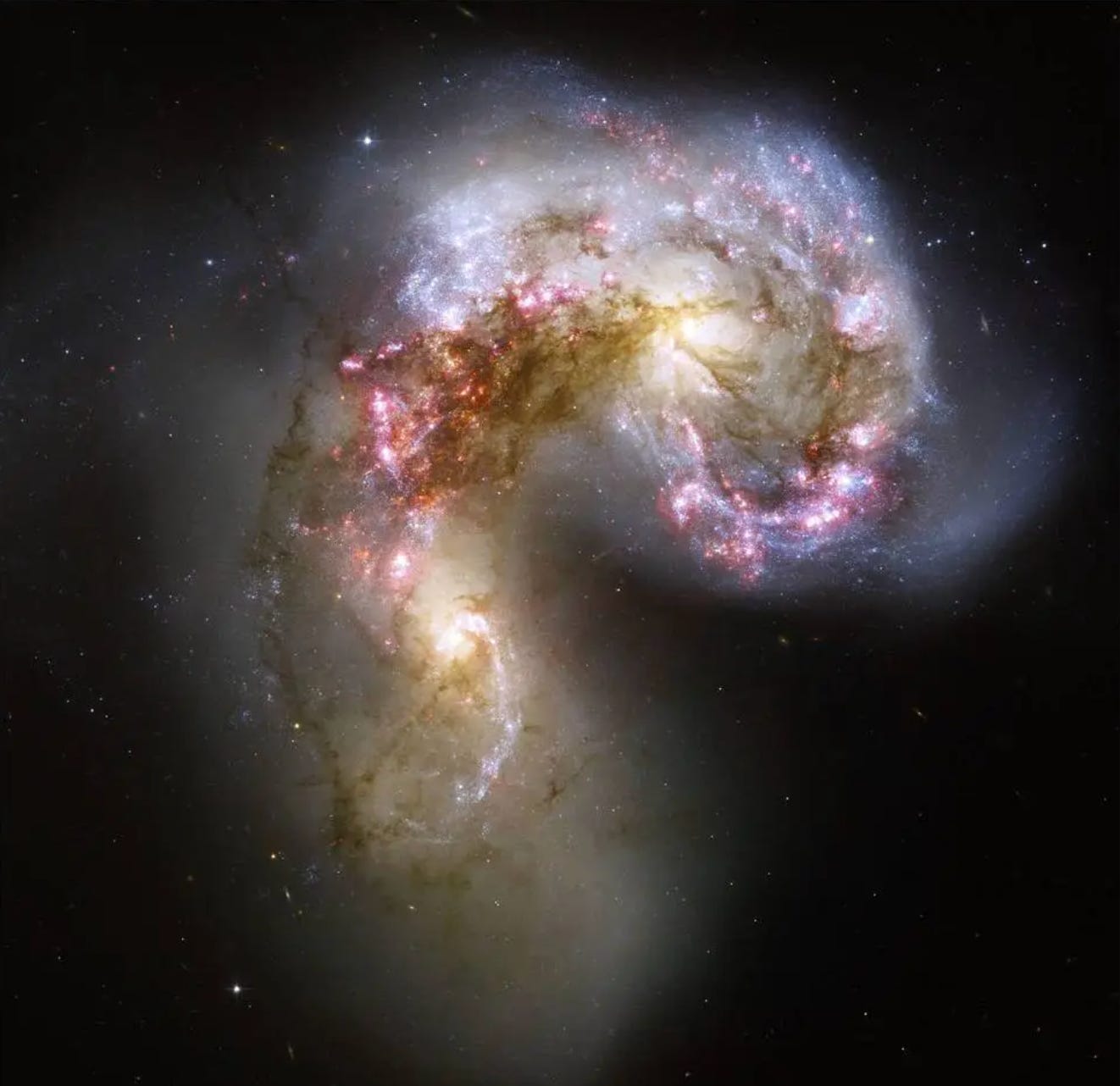
When galaxies collide, the result spans millions of years of spectacular cosmic drama. The Antennae Galaxies showcase this process perfectly—two spiral galaxies locked in gravitational combat, triggering massive bursts of star formation that illuminate the collision zone in brilliant blues and pinks.
Einstein Rings: Cosmic Magnifying Glasses
Among the most elegant phenomena in space, Einstein rings occur when massive objects bend spacetime itself, acting as natural telescopes. These perfect rings of light require extraordinary alignment—the distant source galaxy, massive foreground galaxy acting as a lens, and our viewing angle must be nearly perfectly aligned.
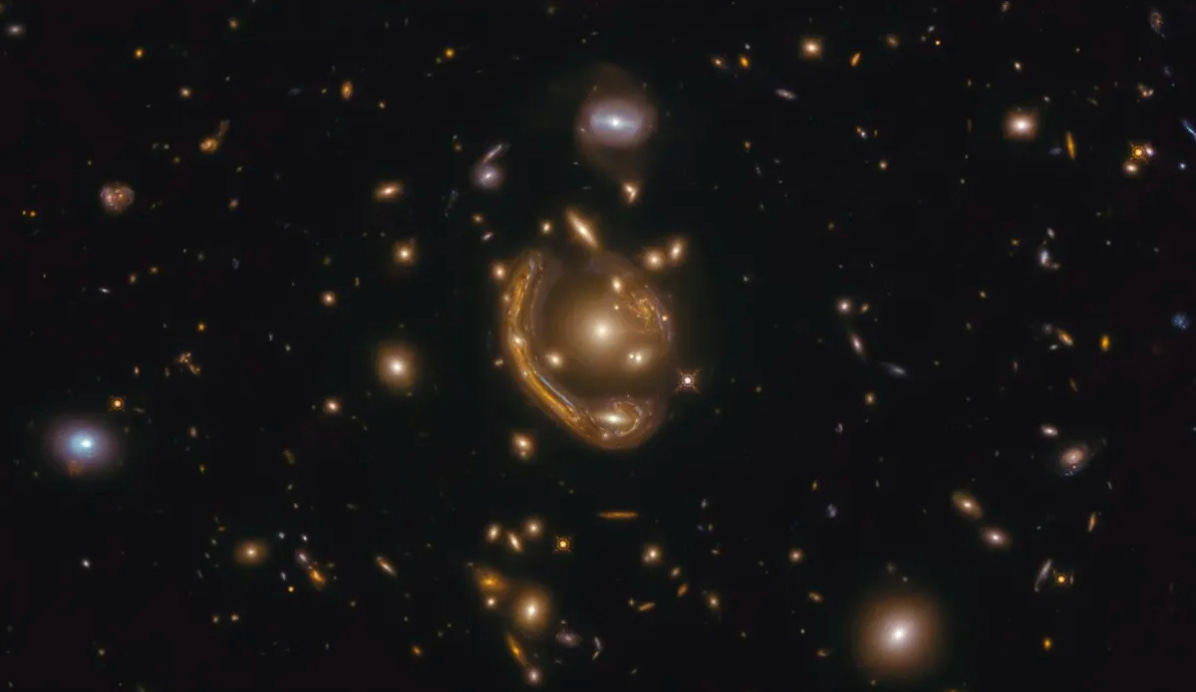
The recently discovered Einstein ring around galaxy NGC 6505, captured by ESA's Euclid telescope, demonstrates this phenomenon beautifully. Light from a galaxy 4.42 billion light-years away is bent into a perfect ring around a galaxy "only" 590 million light-years distant. These rings are extraordinarily rare—occurring in fewer than 1% of galaxies.
Stellar Explosions and Their Colorful Aftermath
Supernovae: The Universe's Fireworks
Supernovae represent the universe's most powerful stellar explosions, and their evolving colors tell the story of stellar death. Different supernova types produce distinct color signatures that change over time
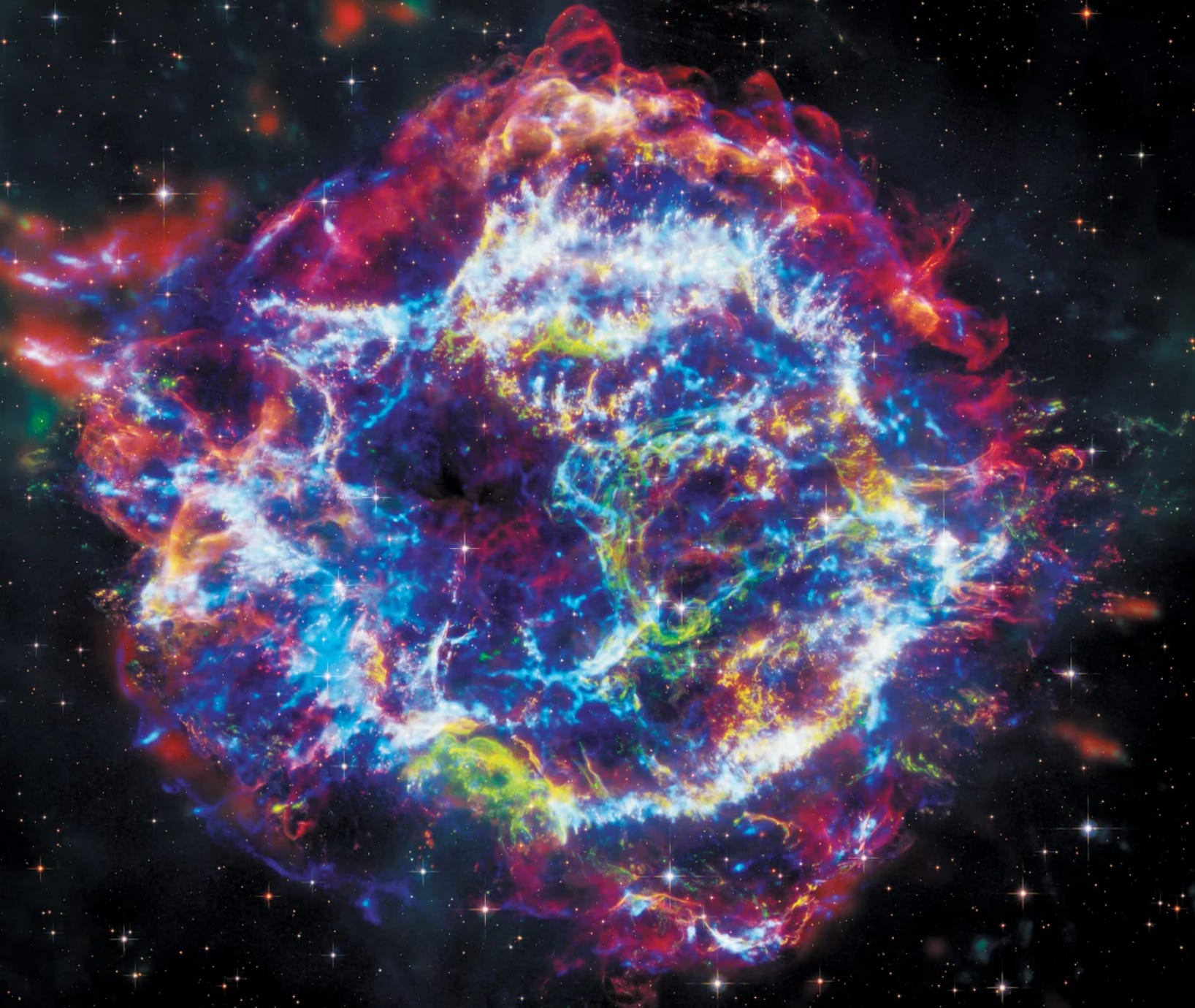
Type II Supernovae (core collapse of massive stars):
Blue-white flashes: Initial shockwave heating surrounding material to millions of degrees.
Red colors: Hydrogen presence in outer stellar layers, absorbing blue light while emitting red.
Type Ia Supernovae (white dwarf explosions):
Yellow hues: Radioactive nickel-56 decay powering the explosion's glow for weeks.
The brightness and color evolution provide astronomers with crucial information about the explosion mechanism, progenitor star, and surrounding environment.
Rare Cosmic Jewels
Kilonovae: Neutron Star Collisions
When two neutron stars spiral together and merge, they create a kilonova—one of the universe's most spectacular and scientifically significant events. The historic GW170817 event in 2017 marked the first time scientists observed both gravitational waves and electromagnetic light from the same cosmic collision.
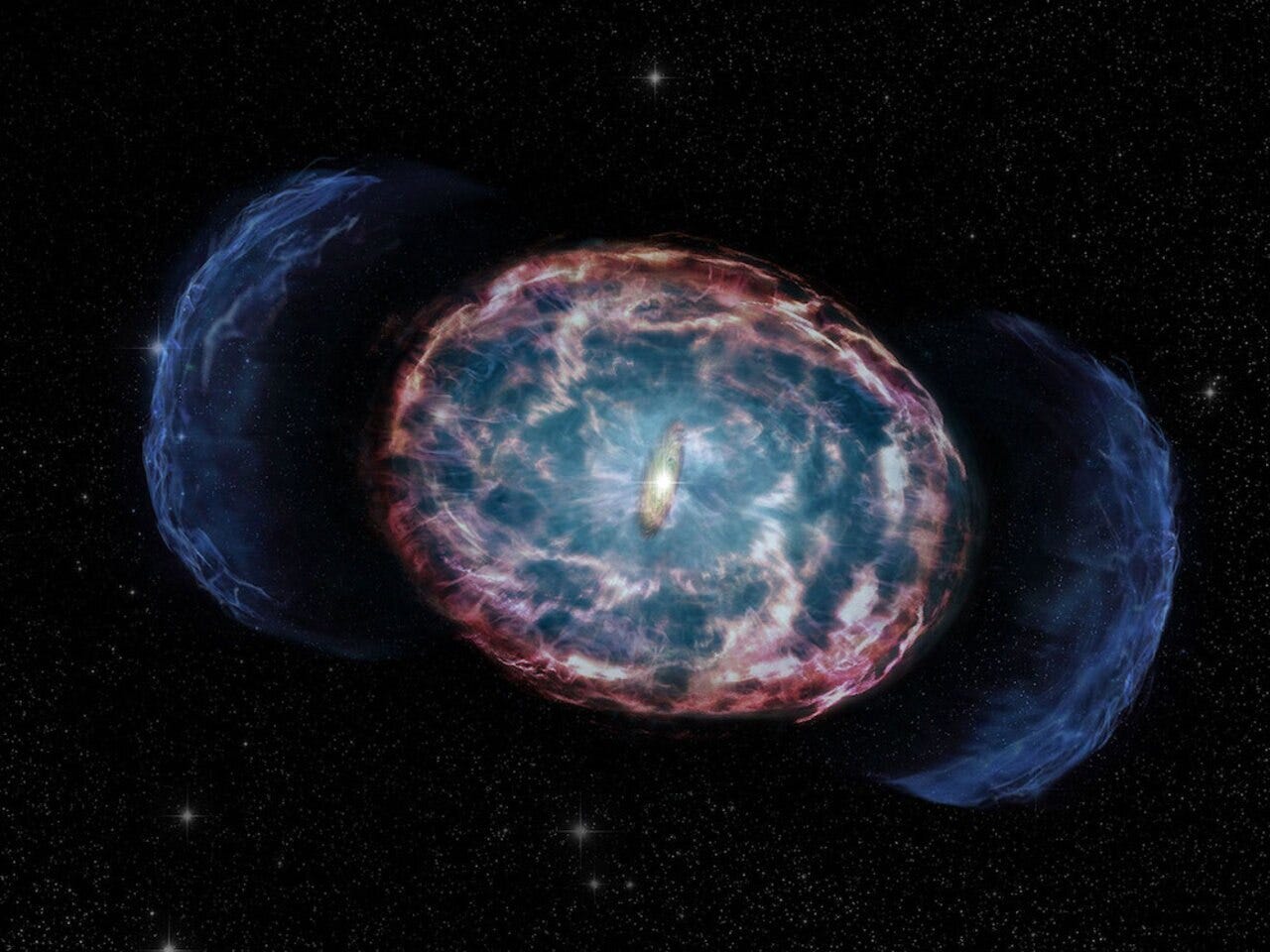
Artist's depiction of a kilonova from merging neutron stars, showing spectacular colorful shockwaves and energetic explosions in space
This merger created gravitational waves detectable for about 100 seconds, followed by a gamma-ray burst and optical transient visible for weeks. The kilonova's color evolved from blue to red as the expanding debris cloud cooled, while heavy elements like gold and platinum were forged in the extreme neutron flux.
The Science Behind Cosmic Beauty
The spectacular colors throughout the universe result from fundamental physics:
Emission spectra: Different elements emit specific wavelengths when energized.
Temperature effects: Hotter objects emit bluer light, cooler objects redder light.
Ionization processes: Ultraviolet radiation strips electrons from atoms, which then recombine and emit characteristic colors.
Doppler shifts: Motion toward or away from us shifts wavelengths.
Magnetic field interactions: Affect particle motion and energy emission.
Modern Telescope Revelations
Every telescope is a time machine, looking into the deep past.
Recent space telescope advances continue revealing hidden cosmic beauty:
James Webb Space Telescope uses infrared vision to penetrate dust clouds, revealing structures invisible to optical telescopes while capturing heat signatures from the most distant galaxies.
Hubble Space Telescope provides incredibly sharp visible-light images, celebrating its 35th anniversary in 2025 with continued discoveries of cosmic phenomena.
Euclid Space Telescope recently discovered rare Einstein rings, demonstrating how new instruments continue finding beautiful phenomena hiding in plain sight.
Formation Mechanisms and Rarity
These cosmic phenomena are precious because of their rarity and extreme formation requirements:
Planetary nebulae last only 10,000-50,000 years—brief moments in cosmic time
Perfect Einstein rings require precise alignment occurring in less than 1% of galaxies.
Kilonovae from neutron star mergers may occur only once every 100,000 years per galaxy.
Record-breaking gamma-ray bursts like GRB 221009A may occur once per 10,000 years.
Recent Discoveries and Future Prospects
The James Webb Space Telescope continues revolutionizing our cosmic perspective with recent highlights including deep field observations revealing thousands of galaxies stretching back to the early universe and infrared views of the Pillars of Creation showing unprecedented detail of stellar nurseries.
The Extremely Large Telescope and next-generation space observatories promise to reveal even more stunning phenomena, potentially discovering entirely new categories of beautiful cosmic events we haven't yet imagined.
Gravitational wave detectors like LIGO and Virgo continue expanding our ability to detect rare merger events, while artificial intelligence now helps identify neutron star collisions in real-time, enabling rapid telescope follow-up observations.
Conclusion
The universe's most beautiful phenomena bridge art and science, inspiring wonder while revealing fundamental physics, stellar evolution, and cosmic processes. From delicate planetary nebular shells to violent neutron star collisions, each represents a unique combination of extreme conditions creating naturally occurring masterpieces.
These cosmic displays demonstrate that beauty and scientific significance aren't opposing forces but complementary aspects of our universe's grand design. As observational capabilities advance, we can expect discoveries of even more spectacular phenomena, each contributing to both our aesthetic appreciation and scientific understanding of the cosmos.